Adding the motion module
The Motion Module turns your starter kit into a motion sensor. By the end of this tutorial you'll have an MH-SR602 wired to your ESP32-C6, surfaced as a binary sensor in your YAML, and flipping live in the web server whenever something moves in front of it.
Before you start
Work through the two prerequisites first:
- Start Here to snap the motion module off the panel.
- First Steps to install ESPHome Device Builder and create your starter kit device.
Attach PIR

The PIR sensor (the small white dome on a tiny PCB) ships separately from the motion module so it can be packed safely. Install it onto the module before plugging anything into the ESP32-C6.
- Take the PIR sensor out of the box.
- Line up the Out name on each side as shown in the gif below.
- Press it down firmly until the pins are fully seated.
Attach motion module
Connect the motion module to the ESP32-C6 using one of the FPC ribbon cables that came with the kit. Either FPC connector on the ESP32-C6 works, top or bottom.
1. Unplug the USB-C cable from the ESP32-C6 so it is powered off.

Handle the FPC connectors gently
The latches are small and the ribbon cable is fragile. Lift the latch with a fingernail, slide the cable in, and press the latch down. Never pull on the cable itself.
2. Flip up the latch on the FPC connector then gently slide the ribbon cable into the connector with the blue side facing upwards. Gently press the latch down to lock it in place.

3. Slide the ribbon cable into the motion module with the blue side facing upwards then press the latch down to lock it in place.

4. Plug the ESP32-C6 back into your computer.
Add to ESPHome Device Builder
ESPHome Device Builder ships an Add Component flow that knows the pin layout for every Apollo Starter Kit module. Use it instead of writing the binary sensor by hand, and you'll get the right GPIO and pin mode on the first try.
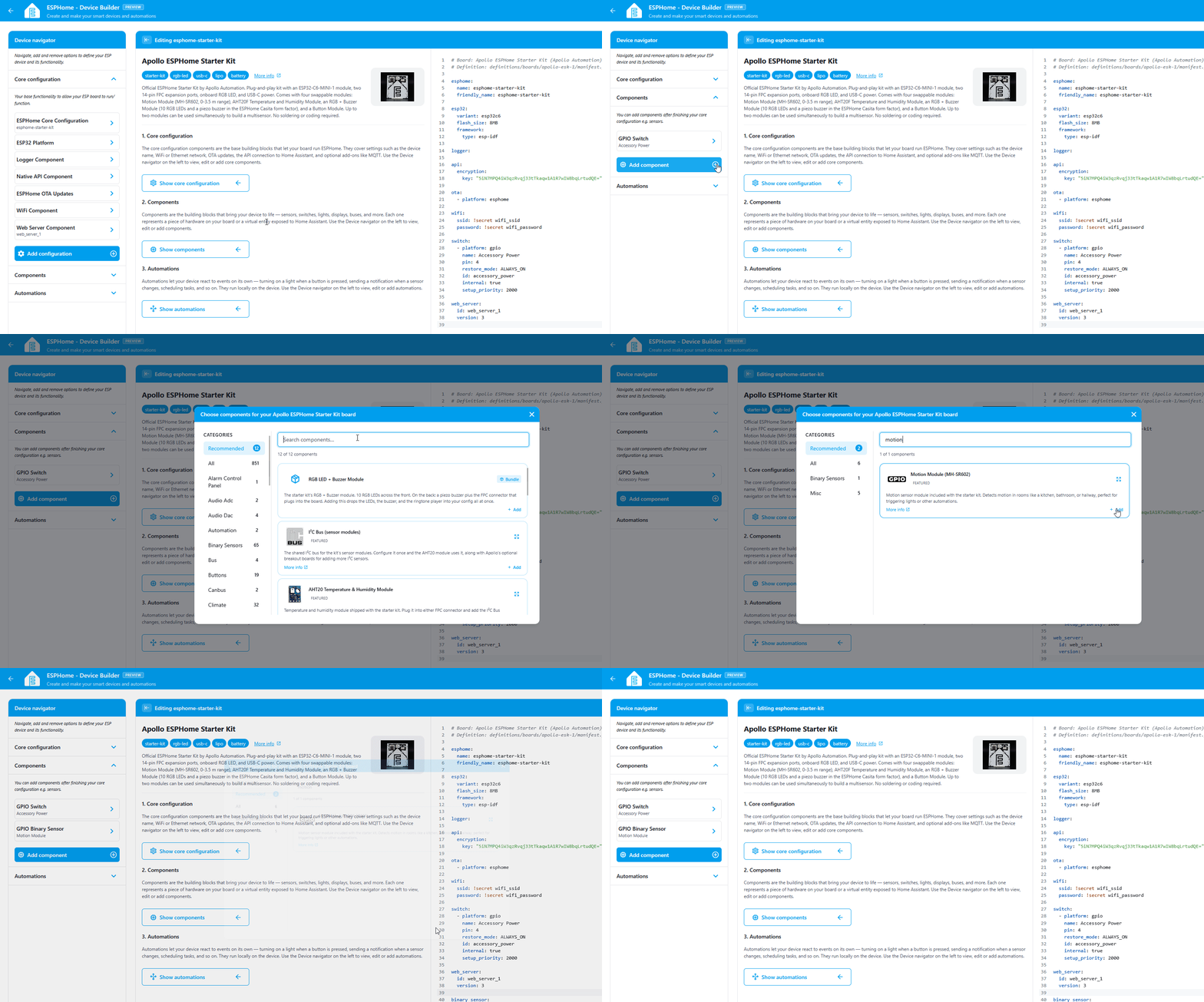
- Open your starter kit device in Device Builder and click Edit.
-
Navigate to the Components section and look for a GPIO Switch named Accessory Power. The Motion module gets its power from that switch, so without it the PIR sensor doesn't get enough power to work. (1)
- Projects you created from the Apollo ESPHome Starter Kit board already include it, and the component picker hides it once your device has it. That's why it isn't in the list of components you can add.
-
If it isn't there, click Add Component, find the Accessory Power Rail card, and click Add. (1)
- Accessory Power Rail covers what the switch does and the settings worth knowing about.
-
Click Add Component in the editor toolbar.
- Search for Motion and select the Apollo Starter Kit PIR motion component.
- Click Add. Device Builder inserts the PIR's binary sensor block into your YAML.
What the Motion YAML does
The block Add Component drops into your config looks like this:
Each option does something specific:
| Option | What it does |
|---|---|
platform: gpio |
Reads a digital input on a GPIO pin. |
name: Motion Module |
The friendly name shown in Home Assistant and the web server. |
pin: 3 |
The GPIO pin (GPIO3) the Motion module's FPC connector wires to on the ESP32-C6. |
device_class: motion |
Tells Home Assistant this is a motion sensor, so it shows the right icon and works in motion-related templates and blueprints. |
id: motion_module |
Internal handle you can reference from automations and lambdas elsewhere in the config. |
Install the software
Flash the device so the new motion entity goes live.
-
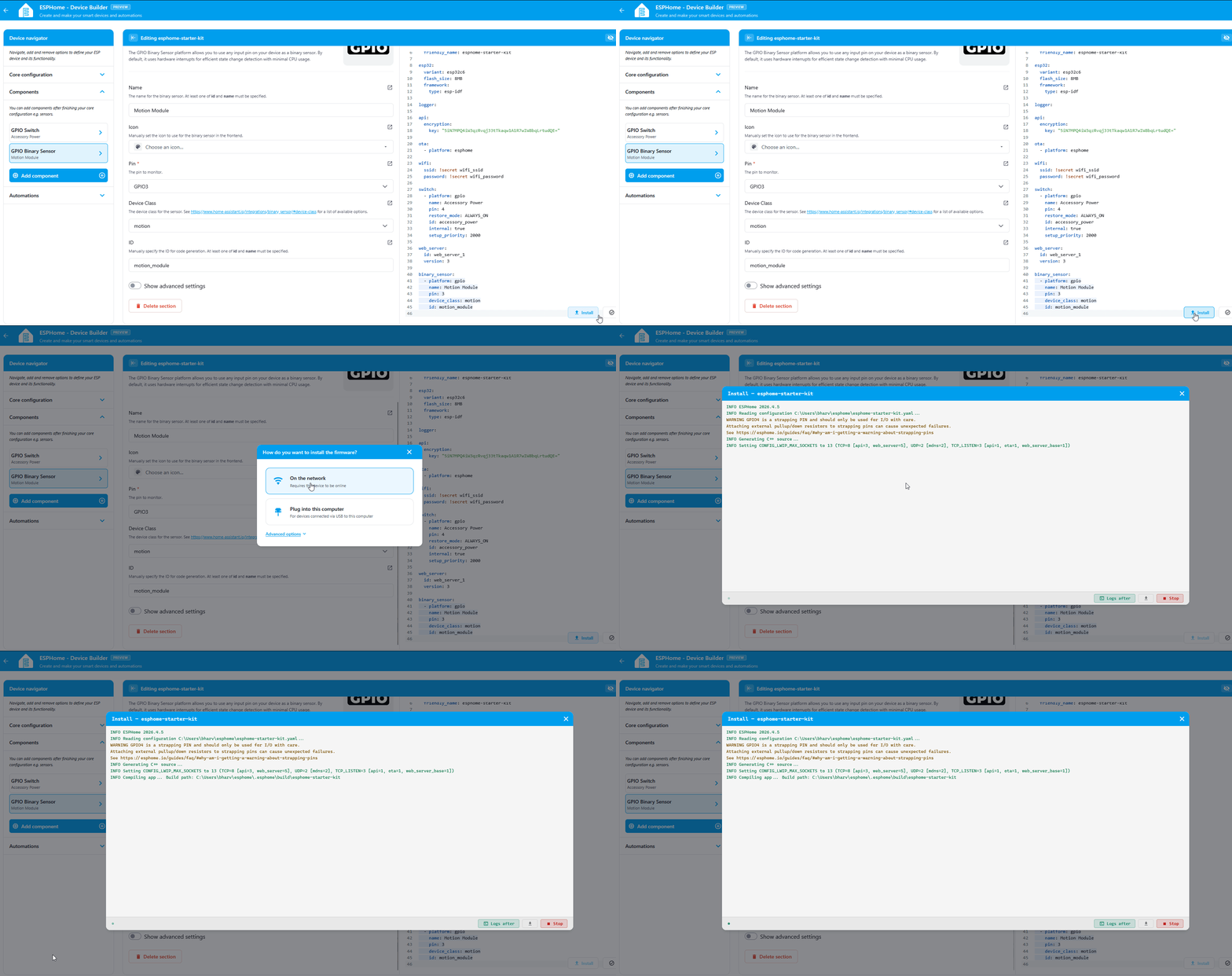
Click Install at the bottom right of the editor. (1)
- We say software because it's the friendlier word. The technically correct term is firmware: code that runs directly on the chip instead of on a computer. That's the word ESPHome's own docs use.
-
Choose On the network if the device is already on your Wi-Fi, or Plug into this computer to flash over USB.
- Wait for the compile and flash to finish. First builds can take a few minutes.
- The device reboots and reconnects to your Wi-Fi on its own.
Test motion
With the device back online, the Motion entity is live on the web server. Open it in a browser on the same network and watch it react in real time.
- In a browser, open
http://<your-device-name>.local/. If you usedesphome-starter-kitas the device name in First Steps, that'shttp://esphome-starter-kit.local/. - Find the Motion entity in the binary sensor list.
- Wave your hand in front of the sensor. The entity flips from OFF to ON while motion is detected, then back to OFF a few seconds after motion stops.
Give the Motion sensor a moment to settle
PIR sensors need a brief warm-up after powering on, usually 5 to 10 seconds, before their readings stabilize. If the sensor reports motion right after boot even when nothing is moving, give it a moment.
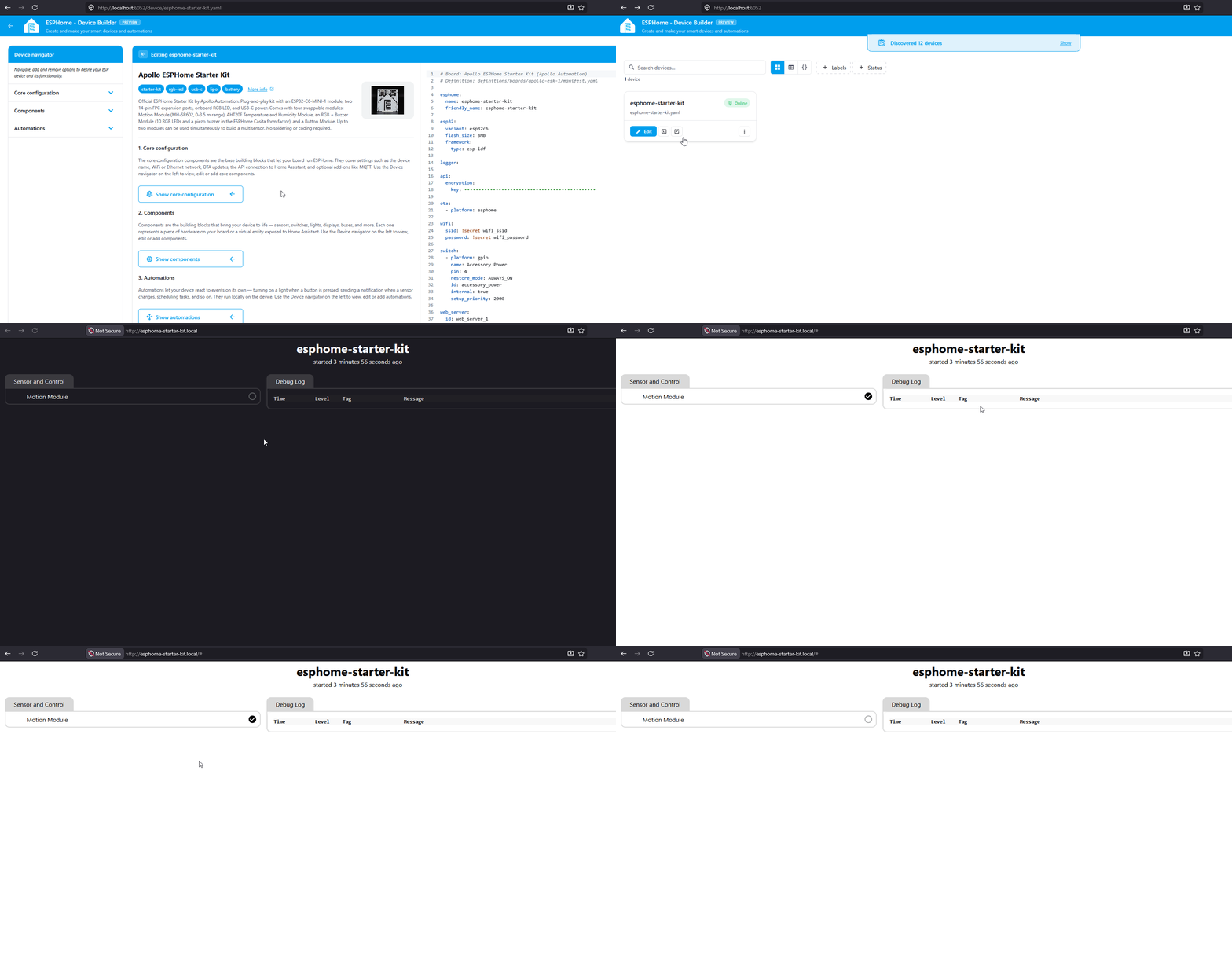
Web server page showing the Motion binary sensor toggling between ON and OFF as motion is detected.
Your Motion module is now ready to use in automations!
You're now ready to make automations around occupancy in your home!
Try it in an automation
Your motion sensor is live. Put it to work:
 Motion-Activated Light
 New to ESPHome? We're here to help.
Stuck on a step or want to show off what you built? Ask questions and share projects with the Apollo community.